

Brandable Domains vs Keyword Domains: Which One Actually Makes You Money?
Brandable Domains vs Keyword Domains: Which One Actually Makes You Money?
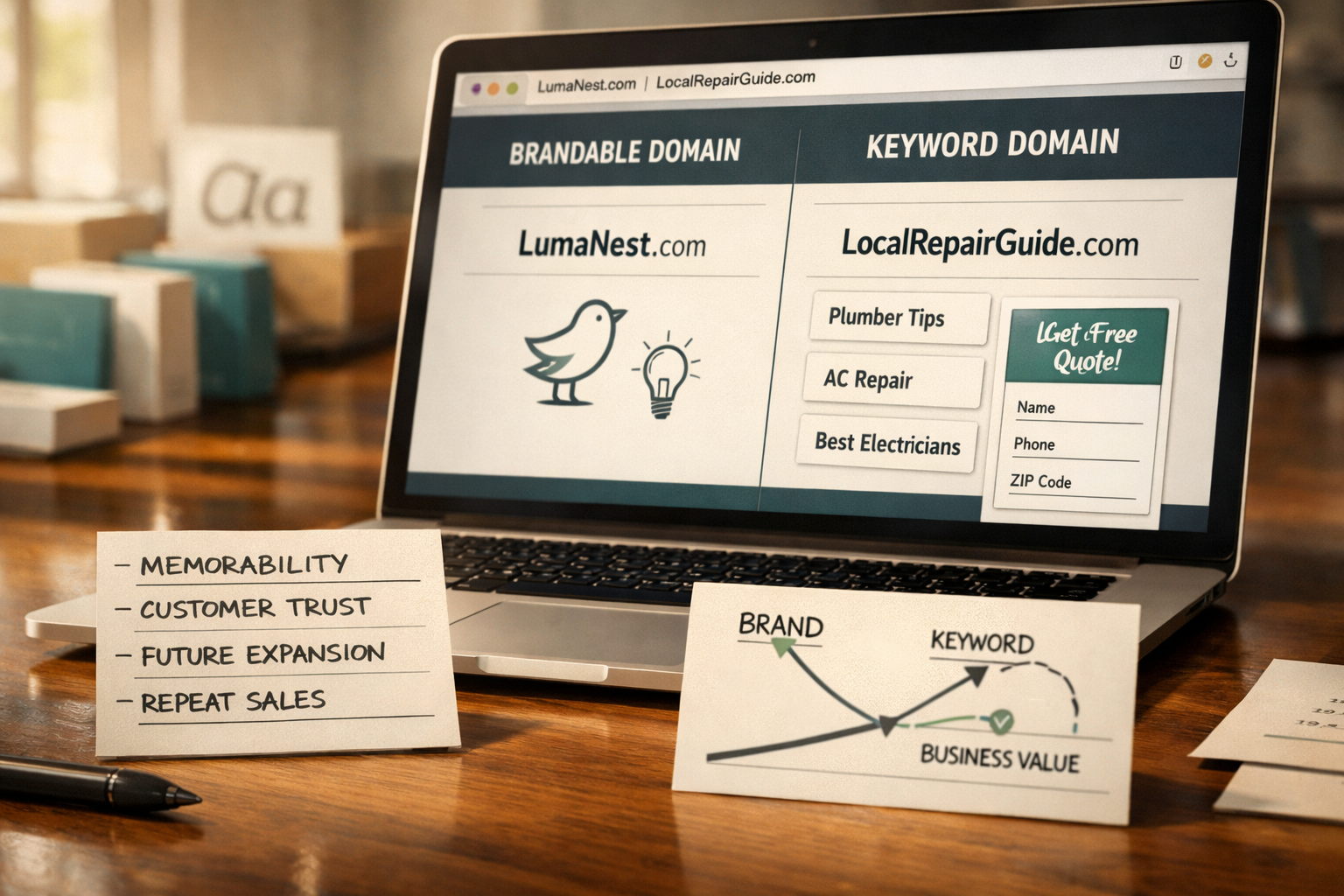
A $10 to $20 yearly renewal can lock you into the wrong business name for years. That is the real risk in comparing brandable domain names vs keyword domains: a cheap domain may still create costly marketing work later.
You want traffic, sales, and a name people remember. A keyword domain can win when buyers search for one clear service. A strong brandable .COM usually gives an ecommerce business more room to grow.
What Is the Difference Between a Brandable Domain and a Keyword Domain?
A brandable domain is a distinct name built for memory and growth. A keyword domain includes words people might type into Google, such as DenverRoofRepair.com or OrganicDogTreats.com. The name itself does not decide your revenue. Your offer, site quality, links, and customer trust do more.
A keyword-match domain tells visitors what you sell before they click. That can reduce confusion on a narrow landing page. A brandable name takes more work at first, but it can become an asset that customers search for directly.
Brandable Domains Build Recall
Think about names such as Amazon, Target, or Etsy. None of those names clearly describes every product sold on the site. Their value grew through customer experience, advertising, distribution, and repeat visits.
A good brandable domain is short enough to say aloud and easy enough to spell. Avoid forced spellings, extra hyphens, and confusing numbers. If someone hears the name during a podcast, they should have a fair chance of typing it correctly.
Keyword Domains Signal Intent
A keyword domain fits a focused offer. AustinEmergencyPlumber.com gives a local searcher immediate context, while a name such as BlueOrbit.com does not. That clarity can support paid ads and local lead forms.
Still, the keyword domain does not guarantee a higher Google ranking. Google evaluates the full page, helpful content, links, technical setup, location signals, and user experience. Exact words in the domain are only one small part of the picture.
A domain name is your website’s human-readable address, not a promise of search placement.
The Name Changes Your Future Options
A keyword domain can box you in. BestRunningShoes.com becomes awkward if you later sell hiking boots, fitness watches, or outdoor clothing. A brandable name gives you a wider path, though you must explain what the business does.
Ask one hard question before buying: will this name still fit if your product line doubles in 24 months? If the answer is no, the low purchase price may hide a costly rebrand.
Which Type Makes More Money for a New Business?
For a narrow, intent-driven project, I’d choose a clear keyword domain. For an ecommerce company you expect to expand, I’d choose a distinctive brandable .COM. Revenue model and business lifespan matter more than the domain label.
A local lead-generation site may earn money from one form submission. A national store may earn from repeat orders, email marketing, referrals, and product launches. Those two businesses need different names.
When a Keyword Domain Wins
Suppose you build a landing page for emergency furnace repair in Cleveland. A focused keyword domain can make the offer clear in a paid search ad, especially when the page has one phone number and one service area.
The business may sell leads to a licensed contractor rather than build a national company. In that case, a narrow name can work well for a project with a limited lifespan. You are buying clarity, not a lifelong corporate identity.
Keyword domains also fit affiliate sites and short-term tests. You can measure calls, form fills, and ad costs over 30 to 90 days. If the numbers fail, you can close the project without changing a larger brand.
When a Brandable Domain Wins
Choose a brandable domain when your plan includes several product categories, outside funding, or a long customer relationship. A name like Warby Parker does not describe every item in its catalog, but it gives the company room to expand beyond one search phrase.
A memorable name also supports direct traffic. Customers can type it into a browser, search the business by name, or tell a friend about it. That traffic does not depend on one keyword phrase staying popular.
The drawback is clear: you must spend more time explaining the offer during the early months. Your homepage, product pages, social profiles, and ads all need to connect the name with a useful promise.
| Business model | Better starting choice | Main reason | Main risk |
|---|---|---|---|
| Local lead page | Keyword domain | Fast service clarity | Limited expansion |
| Affiliate review site | Keyword domain | Matches narrow search intent | Search dependence |
| One-product store | Either option | Depends on product lifespan | Rebrand if the product changes |
| Growing ecommerce store | Brandable .COM | Supports new categories | More work to build recall |
| Marketplace or media site | Brandable .COM | Fits many topics and sellers | Name needs early promotion |
Judge Profit by the Exit Plan
If you plan to sell the website within a year, buyers may value traffic, profit, clean operations, and customer data more than the domain style. A keyword domain with no earnings is still a weak asset.
If you plan to operate for 10 years, brand equity matters more. A brandable name can support packaging, partnerships, retail placement, and products that do not match the original keyword.
Does a Keyword Domain Improve Google Rankings?
No. A keyword domain may clarify the topic, but it does not guarantee a first-page result or a higher ranking. Google can rank a strong brand with no descriptive words above a keyword domain that has thin pages, slow loading, or weak links.
Exact Match Is Not a Shortcut
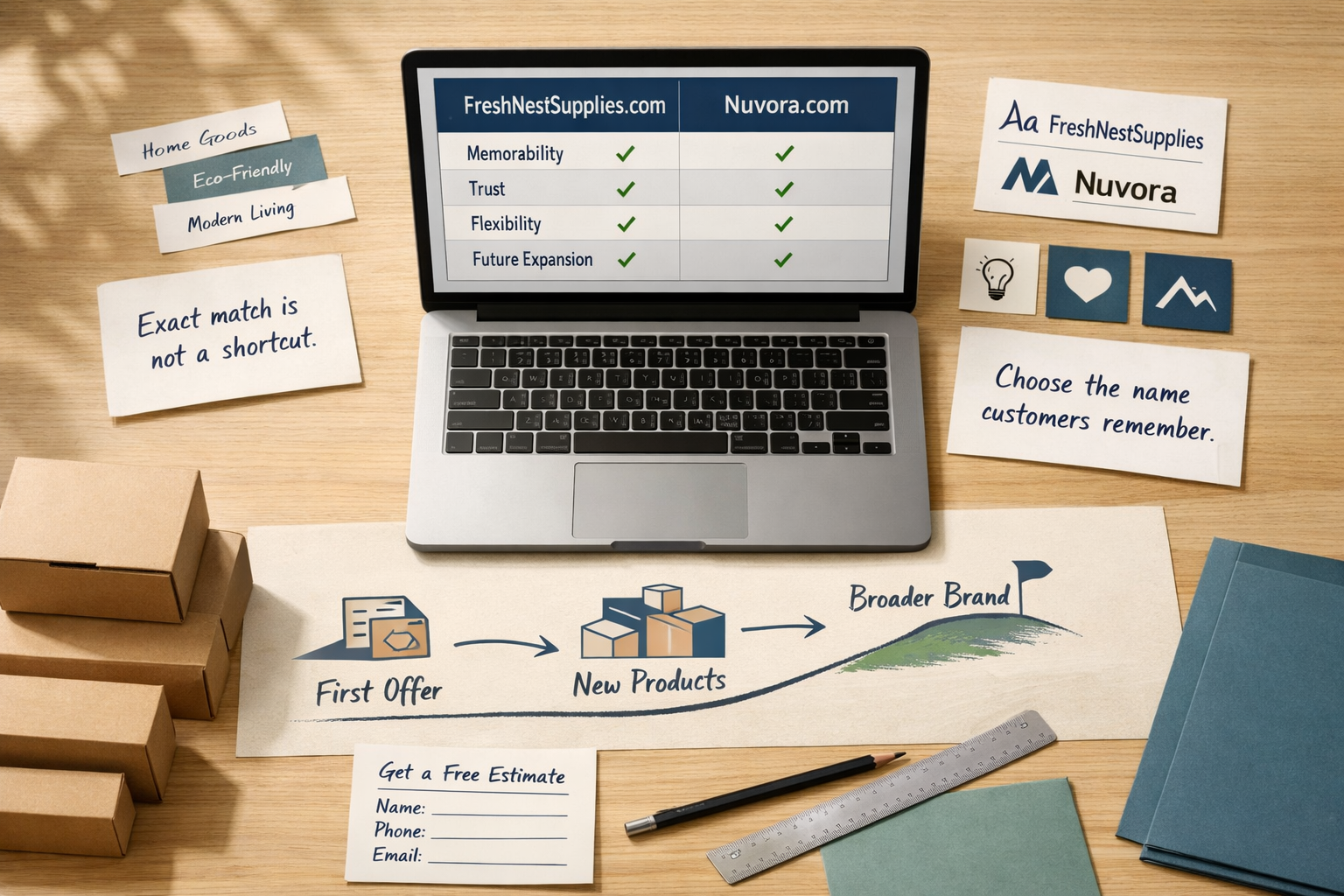
An exact-match domain copies the search phrase closely, such as CheapKitchenTables.com. That may help a visitor understand the page, but it does not replace useful product details, fair pricing, clear policies, or trusted reviews.
Search rankings also change over time. A site that depends on one phrase faces risk when search wording, competition, or Google results change. Your traffic plan should include email, direct visits, partnerships, and paid campaigns.
Backlinks Need Context
Anchor text is the clickable wording in a link. If many sites link to you with the same exact phrase, that pattern may look unnatural. A healthy site earns links with its brand name, URL, product name, and natural wording.
For example, a brandable store called Northline might receive links using “Northline,” “Northline jackets,” and the full web address. That mix supports recognition while still giving search engines useful context.
A keyword domain does not give you permission to build low-quality links. Avoid paid link schemes, copied guest posts, and pages made only to manipulate rankings. One strong mention from a relevant publication is more useful than a pile of random links.
Brand Searches Become an Asset
When customers search your name, you own a valuable path back to your business. You can guide those visitors to products, support pages, seasonal offers, and new categories without relying on a single generic term.
This is where brand memory and SEO differ. Memorability helps people return. SEO helps pages appear for searches. They support each other, but one cannot replace the other.
Which Domain Is Easier for Customers to Remember?
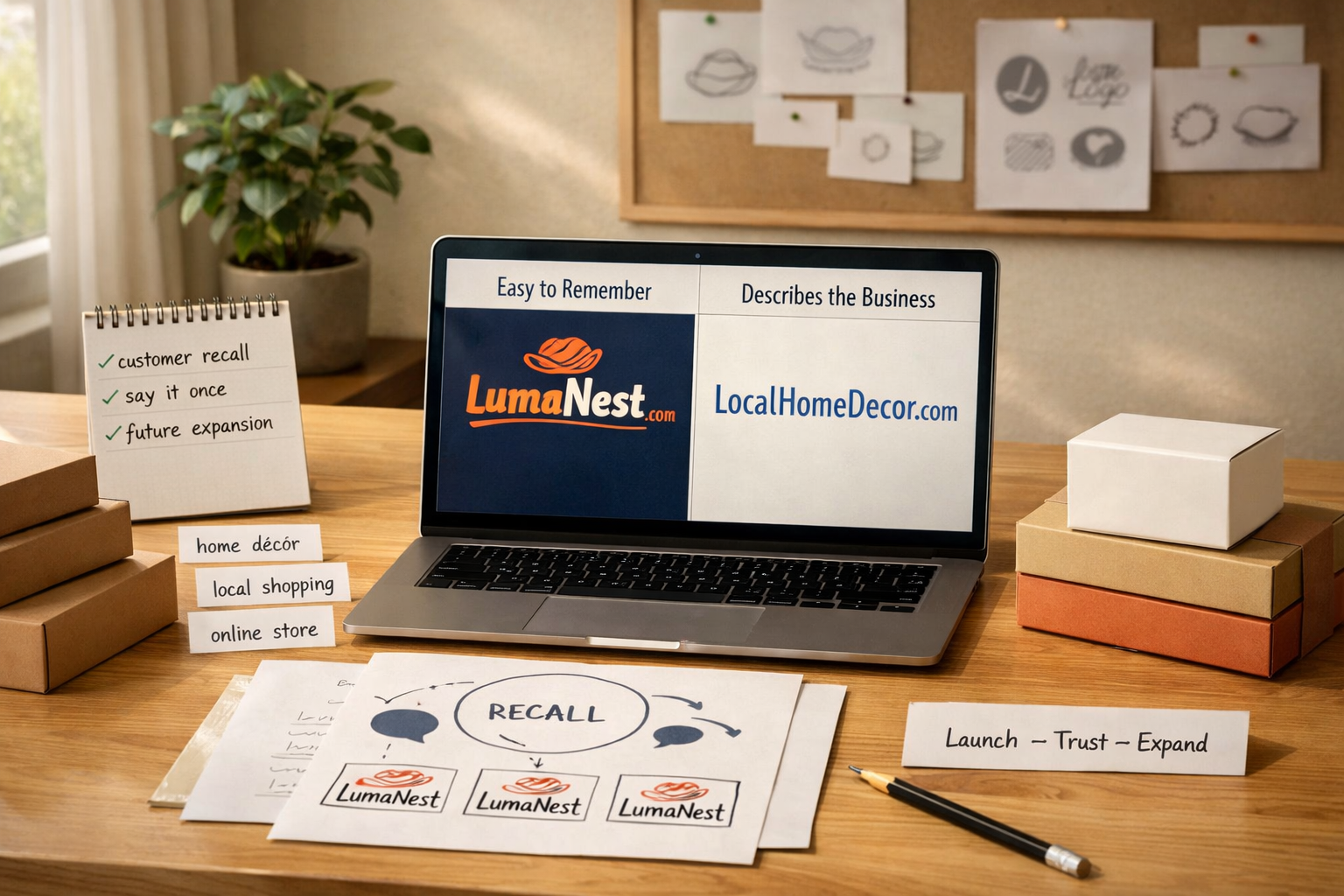
A brandable domain is usually easier to remember when it is short, clear, and easy to pronounce. A keyword domain is easier to understand on first contact. Choose the name that creates fewer mistakes for your actual customer.
Test the name out loud with five people who have no connection to your project. Say it once, then ask them to type it. If several people add a hyphen, misspell a word, or forget the ending, keep searching.
Memorability Has a Practical Test
Picture a customer leaving a store in Chicago. They want to visit your site later, but they do not have a link saved. Can they recall the name after a few hours?
Names with unusual spelling often fail this test. A domain like KleanKitchens.com may look distinctive, but customers could type “Clean Kitchens” instead. That creates lost visits and extra explanation in every ad.
Short names are not automatically good names. A two-letter abbreviation may be hard to say and impossible to connect with your offer. A clear two-word brand can work better than a cryptic four-letter name.
Trust Depends on More Than Words
The extension affects how safe a domain feels. A .COM remains the default choice for many United States businesses because people recognize it and often type it automatically. Other extensions can work, but you should test them with real customers.
A new extension might cost $5 for the first year and $40 at renewal, depending on the registrar and extension. Check the regular renewal price before buying. Never judge a domain by its first-year discount.
Your website also needs a professional email address, a visible phone number when appropriate, shipping terms, refund rules, and secure checkout. A strong domain cannot repair a store that looks unfinished.
Say the Full Name Before You Buy
Check how the words run together. Some combinations create embarrassing or confusing readings when spaces disappear. Search the phrase in Google, review trademark records, and check social usernames before spending money on design.
If the name passes those checks, buy the matching .COM when the price makes sense. Paying $2,000 for a good domain may be reasonable for a serious company, but paying $2,000 based only on resale hope is speculation.
How Do Brandable Domains Affect Conversion and Growth?
A domain can influence trust and recall, but it does not create a conversion rate by itself. Your product page, price, delivery promise, checkout flow, and customer support usually matter more. Use the domain to remove doubt, then fix the parts that stop the sale.
A brandable name works well for repeat-purchase businesses. Customers may buy once from an ad, then return through email or a saved bookmark. That repeat path becomes stronger when the name is easy to remember.
Ecommerce Needs Room to Expand
Imagine starting with reusable water bottles. A domain such as BestWaterBottles.com fits the first catalog, but it becomes restrictive when you add lunch bags, travel mugs, and outdoor gear.
A brandable name lets you add those products without explaining a change in identity. You still need strong category pages and search terms, but the company name does not fight the expansion.
The tradeoff is early education. Your logo, homepage headline, product photos, and paid ads must explain the store. Budget for that work instead of assuming the domain will do it.
Measure the Right Business Signals
Track branded searches, direct visits, email revenue, returning customer rate, and completed purchases. Also track the basics: add-to-cart rate, checkout completion, and customer acquisition cost.
Do not claim that one domain caused a sale unless your test supports that conclusion. Run the same offer, price, and page design when comparing names. A domain change alongside a new ad campaign tells you very little.
A practical test can run for four weeks with a fixed ad budget. Keep the name that produces better qualified visits and stronger customer recall, not simply the one that gets more empty clicks.
Brand Growth Beats Short-Term Clarity
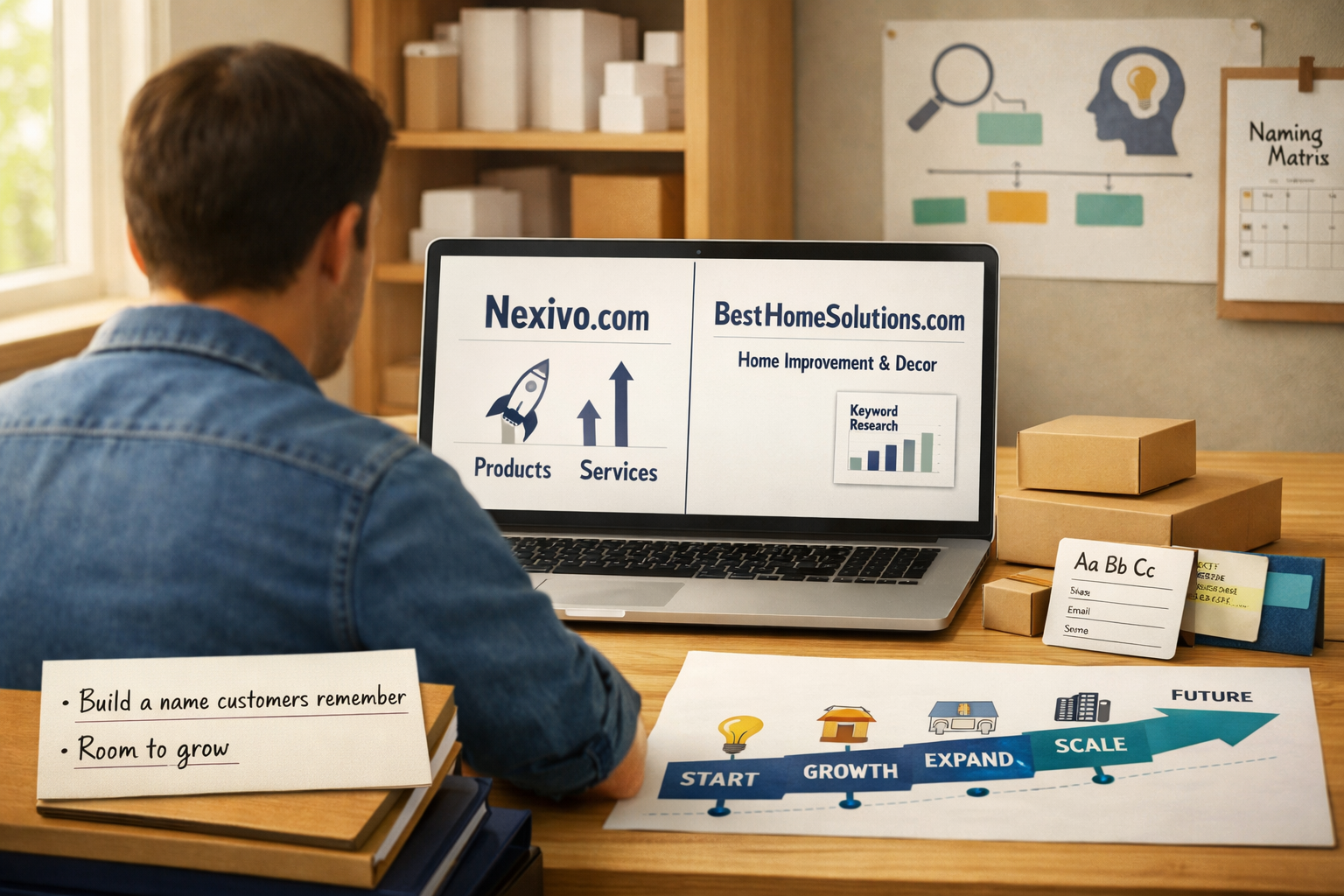
A keyword domain may perform well for a single service page. A brandable name has more value when you plan content, partnerships, packaging, and new products over several years.
That does not mean every business should buy a premium .COM. If the domain costs $25,000 and your project has no tested demand, keep the cash for product, ads, and customer service. A great name cannot rescue a weak business model.
What About Resale Value, Trademark Risk, and Cost?
A domain has resale value only when another buyer sees a clear business use and can legally operate under the name. Keyword domains may attract buyers in a known category. Brandable domains may attract more types of buyers, but only if the name is clean and memorable.
Resale Is Not a Business Plan
Domain investors often compare short .COM names, keyword demand, spelling, and past sales. Those signals can guide research, but they do not promise a buyer. A domain that sits unused costs renewal fees while producing no revenue.
Set a holding limit. For example, review an unused name after 12 months and again after 24 months. If you have no buyer interest, project, or traffic plan, drop it instead of paying forever.
A company-owned domain should be judged by profit, not by a hoped-for sale. If changing the name improves trust and sales, the business may benefit even when the domain has little resale market.
Check Trademarks Before You Build
Search the United States Patent and Trademark Office database before you print packaging or run ads. A brandable name that sounds fresh may still conflict with an existing mark in the same class of goods.
Also search Google, state business records, social networks, and app stores. This is not a substitute for legal advice, especially if you plan national sales or outside investment.
Keyword domains have risk too. A phrase can include a protected brand name, city claim, or product mark. Adding “official” or changing one letter does not make a conflict disappear.
Count the Full Cost
Your budget may include the purchase price, yearly renewal, privacy service, email, trademark research, logo work, and redirects from old domains. A $15 registration can become a $1,500 naming project after design and migration work.
If you change domains later, you must update Google Search Console, analytics, email addresses, business listings, social profiles, ads, and internal links. Use permanent redirects and keep the old domain active long enough to protect visitors and search signals.
A premium domain can be worth the cost when it fits a proven business. I’d rather see you spend $2,000 on a clean name for a validated store than $200 on ten random domains with no plan.
How Should You Choose Between the Two?
Choose a keyword domain for a focused project with one buyer need, one location, or a short testing window. Choose a brandable .COM for a company that plans repeat purchases, several categories, or a long operating life. Your expected business lifespan should make the decision.
Write the planned offer in one sentence. Then write the offer you may sell in three years. If both sentences fit the same keyword domain, the keyword option deserves serious attention.
Use a Simple Decision Check
Ask whether customers need immediate clarity or long-term recognition. A paid lead page for “same-day appliance repair” needs clarity. A store that may sell home goods, tools, and supplies needs a wider identity.
Ask how you will acquire customers. Search-only traffic favors a clear topic, but it also creates dependence on rankings. Email, social content, referrals, retail, and partnerships make a brandable name more useful.
Finally, check the legal and financial side. A name that fails trademark screening or costs $40 every year to renew is not a bargain.
Review Three Real Names
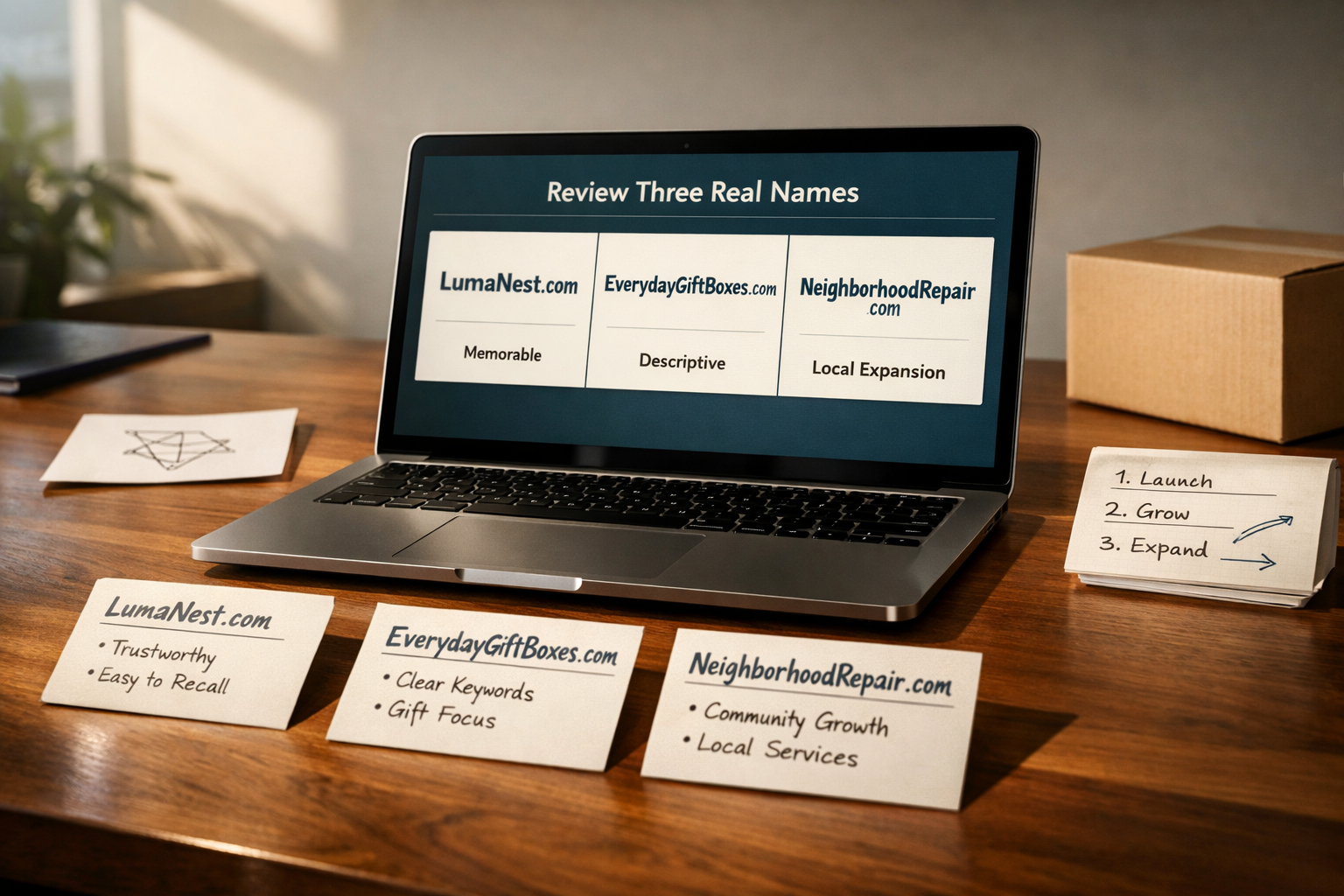
Write down one keyword domain, one brandable .COM, and one backup name. Check spelling, pronunciation, trademark results, social availability, renewal cost, and possible product expansion.
For example, compare a narrow name like ChicagoMealPrep.com with a broader name such as PantryPilot.com. The first gives instant context for a local meal service. The second could support meal kits, recipes, kitchen products, or a national store, but it needs explanation.
Do not buy based on resale excitement alone. Put the name beside your checkout page, email address, packaging, and customer support script. You will see problems faster in those real uses than in a domain marketplace search.
Make the Call Before the Build
If the name passes your checks and fits the business plan, register it before creating the logo or website. Waiting while you build can leave you with a costly rename after the domain disappears.
For premium domain research, marketplace listings and domain-focused resources on socialinternetmarketing1.blogspot.com may give you more names to compare, but you still need to check ownership, price, renewal terms, and trademarks yourself.
The best choice is the domain that supports your next five years without blocking your first sale. That usually means a focused keyword name for a focused project and a trusted brandable .COM for an expandable business.
Frequently Asked Questions
Are keyword domains still useful for SEO?
Yes, keyword domains can clarify a page topic and match a narrow search intent, but they do not guarantee higher Google rankings. Helpful content, technical quality, relevant links, and strong customer signals still matter more than exact words in the web address.
Is a brandable domain worth paying more than $1,000 for?
It can be worth more than $1,000 when the business has proven demand and the name fits several products or markets. Do not pay that amount for resale hope alone. Keep funds for inventory, customer support, and marketing if demand is untested.
Should I choose .COM over a newer domain extension?
Choose .COM when your budget allows and the name is clear, because many United States customers recognize it first. A different extension can work, but check its normal renewal cost, email clarity, and the chance that visitors type .COM by mistake.
eGlobalBay.com — A Brand-Ready Name for the Global Digital Marketplace
Looking for a memorable, professional .COM domain for your next ecommerce, marketplace,import/export, or international business?
eGlobalBay.com is available for acquisition:
https://forsale.godaddy.com/forsale/eglobalbay.com
Can I use a keyword domain and build a brand?
Yes. A focused keyword domain can become a brand if the service stays narrow and customers have a good experience. If you later expand, keep the old domain with redirects and move carefully so visitors, email contacts, and search engines can find the new name.
Related posts:
eGlobalBay.com — A Brand-Ready Name for the Global Digital Marketplace
 Reviewed by Albert Monte
on
September 07, 2026
Rating:
Reviewed by Albert Monte
on
September 07, 2026
Rating:





No comments: